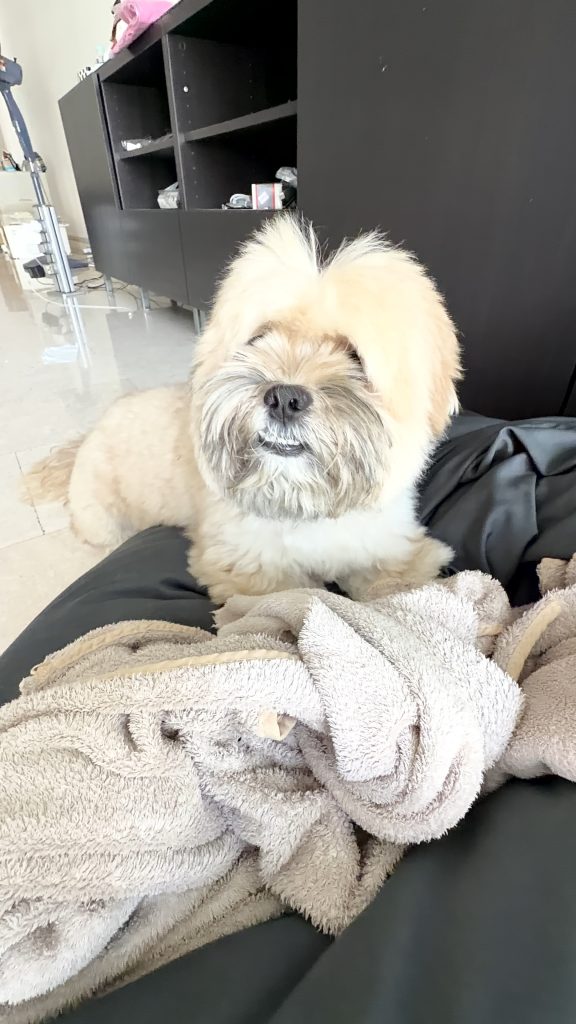
Separation anxiety is one of the hardest and most complex behaviour issues to work with. It rarely has a quick fix and even with good training it doesn’t always fully disappear. This isn’t bad behaviour or stubbornness. It’s a fear response.
If this is your first time hearing the term, separation anxiety refers to what happens when a dog panics when left alone. Barking, destroying things around the house, pacing, and even peeing or pooing indoors are common ways this stress shows up.
One of the biggest misunderstandings is thinking this can be trained out with obedience. Sit, stay, place and impulse control don’t fix panic. A dog can be beautifully trained and still completely fall apart the moment they’re left alone.
Modern behaviour work focuses less on controlling the dog and more on changing how the dog feels in their body. We work on emotional safety, nervous system regulation, gradual exposure, and building positive associations so the dog can actually cope instead of just holding it together.
This is where structured relaxation becomes powerful. Suzanne Clothier’s Really Real Relaxation work focuses on teaching dogs how to genuinely settle and regulate themselves instead of just holding a position on cue. The goal is for the dog to learn what calm actually feels like and how to access it even when the environment changes.
In separation anxiety cases, the issue is not disobedience. It’s that the dog does not feel safe when alone or confined.
Meet Roscoe
Roscoe is a Shih Tzu Schnauzer mix who was adopted during the lockdown in 2020. Since then, he has almost always been with his family and hasn’t had much real practice being separated.
About once a month or every other month he goes for short boarding across the street for a few hours. These stays have never gone smoothly. The staff often report a lot of barking and he usually needs to be moved away from other dogs just so he can settle a little.
He also did a trial at another boarding facility. While he could tolerate being around other dogs, the barking was intense enough that neighbours complained and he was rejected for boarding.
Car rides are another big stress trigger. On the way to the vet he cries, screams, and shows clear panic responses. He has also urinated and defecated in the car from stress, which tells me this is emotional overwhelm, not a training issue.
At home he is very alert to his environment. He stations himself by the front door and monitors footsteps in the corridor. He will bark until someone opens the door to show him there is nothing there. Switching off is hard for him.
The biggest concern about his case is the fact he will be on a 13 hour flight to Spain and I only have less than a week to work with him and his guardian. Needless to say expectations were set upfront and this won’t be a story of major life changing transformations but it is a story of progress.
What Stands Out From a Trainer’s Perspective
A few patterns jump out immediately.
He hasn’t had much separation practice since puppyhood so being away from his people is genuinely hard for his nervous system.
When stress hits, it comes out as intense vocalising especially in unfamiliar or socially demanding environments.
He stays on high alert at home and struggles to fully disengage from environmental triggers.
Confinement and movement such as car rides push him over threshold very quickly.
This is not something you obedience train out of a dog. This is nervous system work.
An Inside Look at Roscoe’s Training Plan
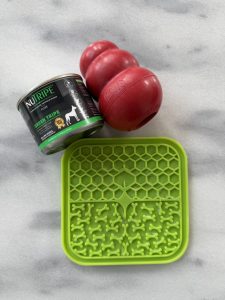
Here’s what we’re actually working on with Roscoe. Nothing fancy. Just proper foundations done consistently.
First, we are building positive associations with the crate. Before we even started, I asked his guardian not to lock him in the crate and to always let him opt out. The crate needs to feel safe, not forced. Every interaction with it should build neutrality or positive feelings.
Second, we are working on his sound sensitivity. He barks when he hears people in the corridors. We reward him when he can offer about ten seconds of quiet instead of going straight into alarm mode. The goal is not suppression. It’s teaching his nervous system that those sounds are not emergencies.
Third, we are doing structured desensitisation to all the leaving cues. Things like key jingling, putting on shoes, walking toward the door, opening and closing the door and coming back before he escalates. Calm non reaction gets reinforced before moving forward.
This work is slow and intentional. That’s how real emotional change happens instead of surface level compliance.
Where Enrichment and Food Choice Fit In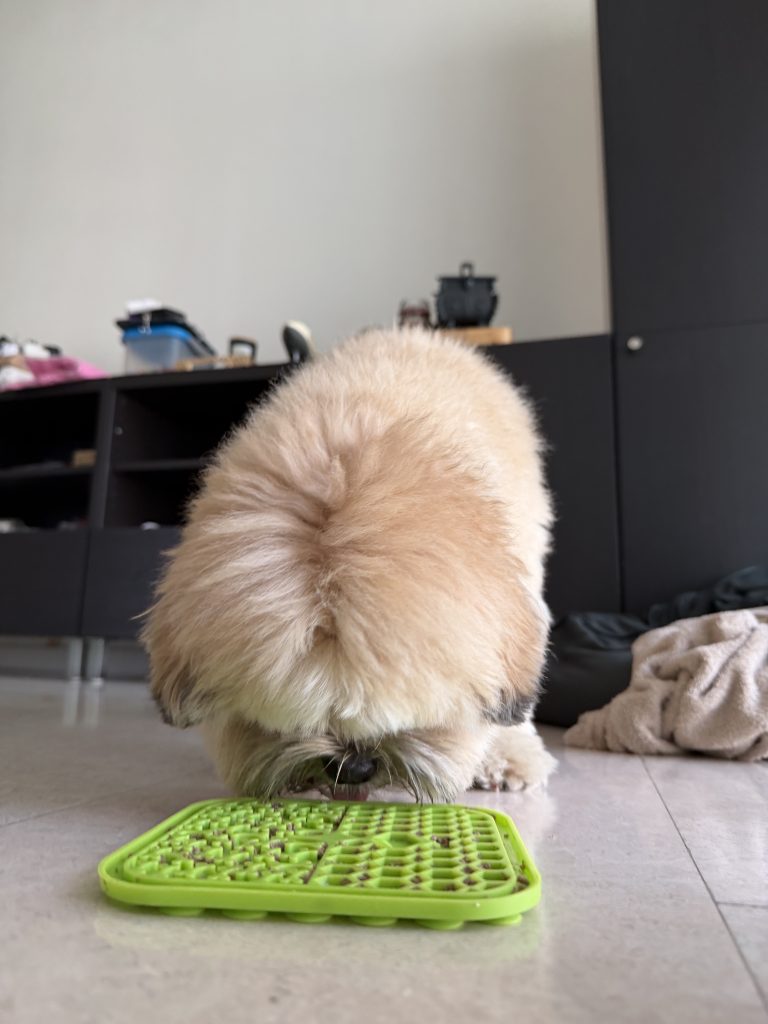
All of this only works if Roscoe is regulated enough to learn. Once a dog is too stressed, nothing sticks.
That’s where enrichment comes in. Using a lick mat with NUTRIPE canned food helps support regulation instead of masking stress. Licking is naturally self soothing for dogs. It helps bring arousal down and creates calmer emotional states. Pairing this with the crate and mild stress exposure helps Roscoe build positive associations without being pushed over threshold.
Food quality matters too. Highly palatable fresh textured food keeps engagement high without needing large portions which is important when you are reinforcing frequently. Green tripe in particular tends to be extremely appealing to dogs because of its natural smell and taste. Most dogs absolutely love it which makes engagement much easier in mildly stressful situations.
Beyond taste, green tripe also supports healthy digestion. When a dog is preparing for overseas travel with changes in routine, environment and stress levels, digestive stability becomes even more important. Supporting gut health removes one more layer of potential discomfort and stress during transitions.
What we’re already seeing is small but meaningful progress. Roscoe is starting to tolerate brief absences better, and most importantly, he has begun eating in the car. For a dog that previously barked intensely and struggled to stay regulated during car rides, that’s a significant shift in emotional state.
That change doesn’t happen by accident. It’s a combination of proper nervous system work, thoughtful training progression, and using food that is genuinely motivating and easy for him to engage with. NUTRIPE’s palatability has made a real difference in helping him stay engaged instead of escalating.
This isn’t about shortcuts or miracle fixes. It’s about stacking the right inputs consistently and letting the nervous system adapt over time.
If you’re working through separation anxiety, travel stress, or big emotional behaviours with your dog and want real, ethical training support, follow along for more case work and practical breakdowns, or reach out if you’d like help with your own dog.
To learn more about NUTRIPE (if you’re based in Singapore) , click here.